


MENTAL HEALTH IN CHILDREN (PART 2)
Understanding Emotional Distress in Primary Care
ST ANN’S BAY, St Ann; May 13, 2026
Dr Rochelle Bailey made the point in Part 1 of this article that children sometimes express their needs and concerns not in words but in actions picked up by the family physician and then requiring referral to specialists CHILDREN & MENTAL HEALTH. In this, the second part of her article exclusive to the North Coast Times, Dr Bailey, referencing her experience, suggests that healing is “not confined to clinical spaces.” — Editor
By Dr Rochelle Bailey

In Jamaica and across the Caribbean, family structures are often shaped by migration, economic necessity, and shifting social dynamics. Many children maintain emotional bonds with parents who are not consistently physically present.
Research suggests that approximately 40 percent of children experience at least one adverse childhood experience, including separation from a primary caregiver. These experiences are associated with increased risks of anxiety, depression, behavioural challenges, and functional physical symptoms.
Even when absence is circumstantial rather than intentional, the psychological impact on a young child can be significant.
The role of primary care
Primary care remains the frontline for recognising these concerns.
It is within this setting that:
* repeated unexplained symptoms are first observed
* behavioural changes are noted over time
* family dynamics are explored
* early intervention becomes possible
The responsibility extends beyond diagnosis. It requires interpretation, patience, and a willingness to look beyond the obvious.
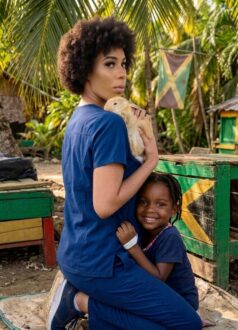
Community engagement and healing beyond the clinic:
Beyond my clinical practice, I operate Bailey Blues Farm, a space intentionally created to support children with autism and those who benefit from structured, calming, and sensory-friendly environments.
A key feature of the farm is our interaction with rabbits, which has become a meaningful form of animal-assisted engagement often referred to as bunny therapy.
Through gentle, supervised interaction with rabbits, children are supported in several important ways:
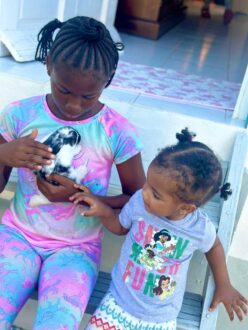
(Healing hearts, mending minds)
* improved emotional regulation through calm, tactile sensory input
* reduced anxiety through grounding, non-verbal interaction
* development of empathy and nurturing behaviours
* increased attention and engagement in a low-pressure environment
* support for communication through shared, non-threatening experiences
Rabbits offer a uniquely soothing presence. Their softness, quiet nature, and predictable behaviour make them especially helpful for children who may experience sensory overload, anxiety, or difficulty with verbal expression. For many children, particularly those on the autism spectrum, bunny therapy provides a bridge between emotional experience and safe external connection.
This work has reinforced my belief that healing is not confined to clinical spaces. It also happens in environments where children feel safe, accepted, and free to engage at their own pace.
Once identified, these children benefit from a structured and multidisciplinary approach. Depending on severity and presentation, referral may include:
* clinical psychologists for therapy and behavioural support
* school guidance counsellors for academic and social monitoring
* social services where family support is needed
* child and adolescent psychiatrists for complex or severe cases requiring specialised assessment or pharmacological management
Despite resource limitations in the region, timely referral can significantly improve outcomes.
A FINAL REFLECTION
Children do not always have the language to explain what they feel. So they communicate in the ways available to them.
Through behaviour. Through symptoms. Through repetition.
If we are willing to observe closely and listen deeply, we will recognise that every symptom carries meaning.
And in doing so, we take one step closer to building not only stronger minds, but a safer, more understanding future for our children.
“In primary care, we are not just treating symptoms; we are interpreting stories. When a child cannot find the words, the body will speak. It is our responsibility to listen with more than our ears.”
— Dr. Rochelle A. Bailey is a family physician in private practice in St Mary, Jamaica